
Cat Scratching or Losing Fur? 6 Common Cat
Skin Problems in the Philippines
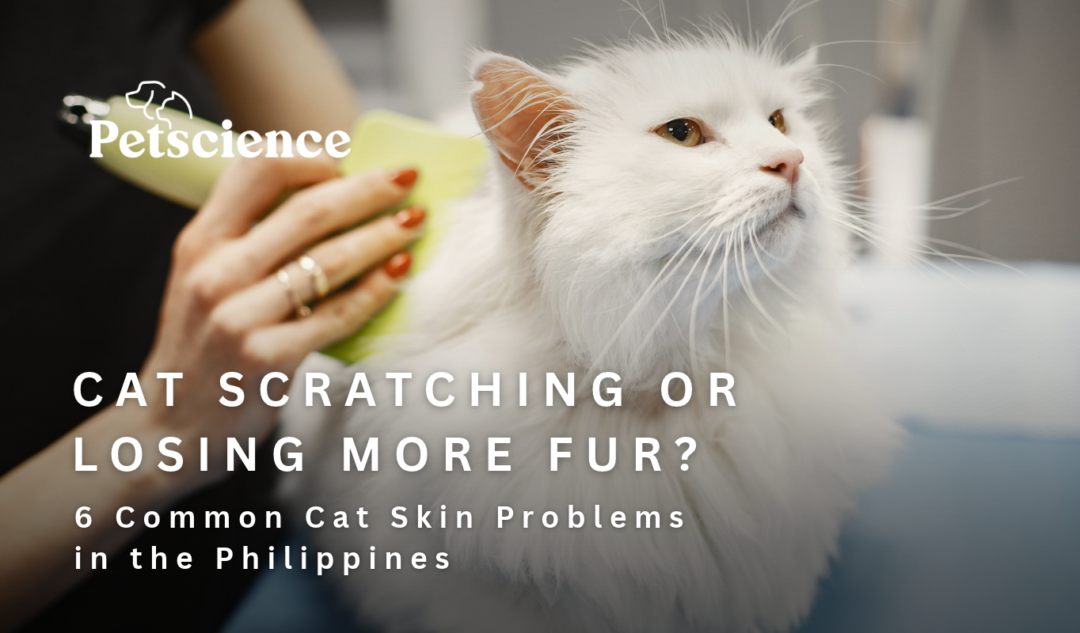
Every cat parent wants the fluffiest cat of them all. But in a warm, humid country like the Philippines, skin and coat trouble is never far away. Skin and haircoat concerns account for as many as 1 in 4 visits to the vet. Warm, humid weather also favors fungal infections such as ringworm, and in warm climates fleas can persist all year round.
Cat skin problems often start quietly: a little extra scratching, a bit more shedding, a dull coat. This guide explains the signs to watch for, six common causes, how your vet finds the cause, and how to care for your cat’s skin and coat at home.
In short:
- Scratching, licking or chewing the fur, hair loss, scabs, flaky or greasy skin and bad odor are reasons to see a vet. Many skin problems look alike, so the cause needs a proper check.
- Most cats do not need regular baths. Use any medicated shampoo only as your vet directs.
- Do not self-diagnose, and do not use human products on your cat.
Signs your cat has a skin problem
- Excessive scratching, licking or chewing of the fur
- Redness or swelling of the skin
- Hair loss or bald patches
- Scabs, crusts or small bumps, often around the head, neck and back
- Scaly, flaky or greasy skin, or dandruff
- A bad smell from the skin or coat
- A dull, thin or matted coat
- Ear irritation or head shaking
When to see a vet
See your vet if the scratching, licking or hair loss does not stop, if the skin looks red, sore or scabby or smells bad, or if the coat changes suddenly. If your cat has both hair loss and itching, the itching should be investigated first.
6 common cat skin problems
- Flea allergy dermatitis. Some cats react strongly to flea saliva. Look for itching, scabs and fur loss around the face, neck and back. You may not see fleas, but you may find flea dirt in the coat. Fleas can persist all year in warm climates.
- Skin allergies. Food and environmental allergies, such as dust and pollen, can cause itching and hair loss from overgrooming.
- Ringworm. Despite the name, it is a fungus, not a worm. A classic sign is a slowly expanding ring of hair loss and scale, but not every cat shows this pattern. It is more common in warm, humid environments and can spread to people and other pets.
- Mites (mange). Mites can cause intense itching and areas of flaky skin or hair loss.
- Bacterial or yeast infections. These often make the skin smelly, weepy and red, and they often follow another skin problem.
- Oily or scaly skin. Excess oil, scaling and clogged hair follicles can cause odor, dullness and recurring discomfort.
How your vet finds the cause
Many skin diseases look alike, so your vet will ask about itching, diet, products, fleas and other pets, examine the skin, and may run tests such as a skin scraping or a fungal culture.
The right treatment depends on the cause. Mild bacterial skin infections may be treated with an antibacterial shampoo alone, but more severe ones often need oral antibiotics too. For ringworm, shampoo alone is not enough. Because ringworm can spread to people and other pets, wash your hands after handling your cat and tell your vet about anyone at home with skin patches.
Cat coat and skin care at home
- Check the coat every day and brush often. Look for tangles, mats, fleas, lumps and sore spots. Brush out burrs and tangles before any bath.
- Bathe only when needed. Cats groom themselves, and vets say most cats only need a bath when a veterinarian directs it or to clean off something harmful. Bathing too often can dry the skin. If your vet prescribes a medicated shampoo, follow their instructions on how often to bathe and how long to leave it on.
- Control fleas all year round. Ask your vet which flea control suits your cat. If one pet has fleas, other pets and the home may need treatment too.
- Feed a complete and balanced diet. Skin and coat depend on nutrition, and essential fatty acids must come from the diet. Ask your vet before adding supplements, and use products made for cats.
- Keep stress low. Stress or pain can make a cat overgroom and pull out fur, so steady routines and quiet resting spots help.
- Do not self-medicate. Advice from online groups cannot replace an exam, and human products or leftover medicines can do harm.
How your vet may support your cat’s skin and coat: VET EXPERT essentials
Shampoos and supplements are one part of skin care, and they work best once your vet has found the cause. The products below are from Petscience’s VET EXPERT line, and your veterinarian can tell you whether any of them suits your cat. See the full range of VET EXPERT essentials for your cat.
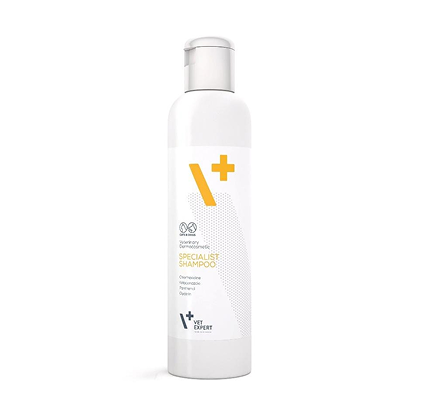
Gentle Relief for Sensitive Skin: VET EXPERT Specialist Shampoo
Bathing a cat needs care, especially when the skin is already irritated or dry. Harsh, generic cleansers can strip away natural skin oils and make dry skin feel worse.
VET EXPERT Specialist Shampoo is a dermocosmetic (a skin-care shampoo) formulated for dogs and cats needing gentle dermatological care. It is designed to soothe sensitive, irritated or flaky skin and cleanses without disrupting the skin’s natural balance. Its targeted ingredients help calm redness, relieve persistent itching and reinforce the skin’s natural protective barrier. Use it as part of the hygiene routine your veterinarian recommends, to leave the coat clean and soft.
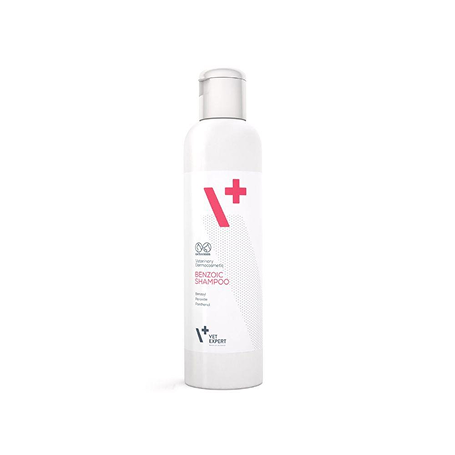
Deep Purifying Care: VET EXPERT Benzoic Shampoo
Some skin problems involve excess oil, scaling or clogged hair follicles. When oil and skin debris build up around the follicles, regular grooming is not enough, and odor, dullness and skin discomfort can keep coming back.
VET EXPERT Benzoic Shampoo is made for pets with oily skin, seborrheic conditions and follicular buildup. Its active ingredient, benzoyl peroxide, gives deep degreasing, keratolytic (scale-loosening) and antimicrobial action. It helps flush clogged hair follicles, remove surface scales and manage skin odor. Use it under veterinary guidance.
Benzoyl peroxide can be drying to the skin and may bleach fabrics. Keep it away from your cat’s eyes, and ask your vet how often to use it.
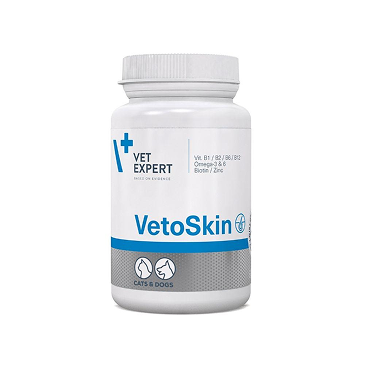
Nourishment from the Inside Out: VET EXPERT VetoSkin
Healthy skin and a glossy coat also depend on nutrition. Without enough essential fatty acids, vitamins and minerals, skin cells struggle to hold moisture and keep a strong barrier.
VET EXPERT VetoSkin is an oral supplement formulated to support skin and coat health from within. It is rich in balanced Omega-3 and Omega-6 essential fatty acids, alongside skin-supporting vitamins and zinc, and helps reduce dryness, minimize excessive shedding, soothe itching and restore a glossy coat.
No pills needed: with VET EXPERT’s Twist-Off capsule, you twist or cut the tip and squeeze the palatable formula over your cat’s favorite meal, or offer it directly. Supplements work best once the cause of itching, such as fleas, is under control. Use it as directed by your veterinarian.
Skin, fur loss and urinary health
Not every bald belly is a skin problem. Some owners bring a cat in for belly hair loss only to find a painful urinary problem. Read our guide to cat urinary problems in the Philippines to learn the warning signs, including the emergency signs of a blocked cat.
Frequently asked questions
Why is my cat losing fur? (Bakit nalalagas ang balahibo ng pusa ko?)
Common causes include ringworm, fleas and flea allergy, other allergies, mites and infections, and overgrooming from itching, stress or pain. Hair loss is a sign, not a diagnosis, so your vet needs to find the cause.
Can people catch ringworm from cats? (Nakakahawa ba ang buni ng pusa sa tao?)
Yes. Ringworm can spread from cats to people and other animals. Some cats carry it with very few signs. See your vet if you notice patches of hair loss and scale, wash your hands after handling your cat, and see a doctor if you develop skin patches.
How often should I bathe my cat?
Most cats do not need regular baths, and bathing too often can dry the skin. If your vet prescribes a medicated shampoo, follow their instructions on how often to use it.
My cat is scratching but I cannot see fleas. Could it still be fleas?
Yes. Fleas are hard to spot on cats, but you may find flea dirt in the coat. Flea allergy can cause itching even from a few bites, so ask your vet to check.
Is shedding normal?
Yes. Cats shed a little all year round. See your vet if you notice bald patches, thinning, scabs, redness or flaky skin, or if shedding suddenly increases.
Can a supplement fix my cat’s itchy skin?
Skin supplements can help in some cases of dry, flaky skin, but they do not replace finding the cause. Omega-3s work best when the underlying cause of itching, such as fleas, is controlled. Use products made for cats and ask your vet.
Talk to your vet about your cat’s skin and coat
If your cat shows any of the signs in this article, book a vet visit. Before you go, jot down when the itching or hair loss started, where it is, and any new food, products or pets at home. Your vet can then work out the cause and the right care.
At Petscience, we bridge clinical veterinary expertise with everyday home care. Guided by our commitment to being designed by experts, trusted by veterinarians, and loved by pets, we help cat owners across the Philippines care for their cats with confidence.
Explore our full feline catalog online and ask your vet which, if any, VET EXPERT essentials are right for your cat.
This article is for general information and does not replace veterinary advice. Always consult your veterinarian about your cat’s health.